
The Center for Reproductive Medicine maintains a downtown Mobile clinic at 50 N Florida Street — in the Government Street medical corridor that has long served as a hub for specialty medical care in Mobile, Alabama. This location is distinct from the practice's other Mobile address at 3 Mobile Infirmary Circle, which sits on the hospital campus of Mobile Infirmary Medical Center. The N Florida St office offers patients a downtown setting: accessible from Mobile's urban core, the downtown business district, and the surrounding historic neighborhoods. For patients who live or work near downtown Mobile, or who prefer a standalone clinic environment to a hospital campus, 50 N Florida St is the relevant address. For a broader comparison of fertility clinics in Alabama, explore the state directory.
Physicians and Clinical Team
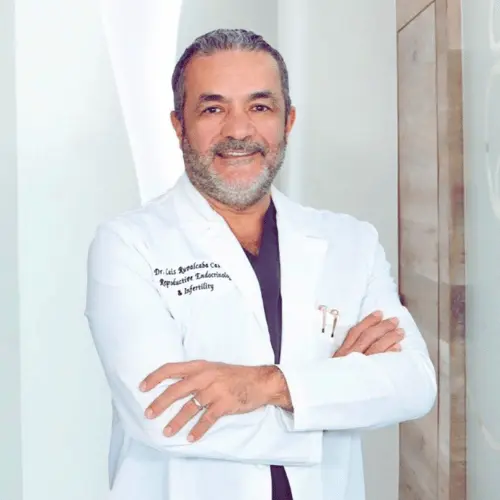
The Center for Reproductive Medicine's physician team provides continuity of care across both Mobile locations. Board-certified reproductive endocrinologists with subspecialty fellowship training lead the clinical work. The fellowship designation — reproductive endocrinology and infertility — distinguishes these physicians from general OB-GYNs or internists who may offer limited fertility services; REIs specialize exclusively in the diagnosis and treatment of infertility and hormonal disorders affecting reproduction.
The downtown location at 50 N Florida St reflects the practice's strategy of serving Mobile's diverse patient population at two geographically distinct points in the city. Patients in downtown Mobile, in the Midtown and Spring Hill neighborhoods, and in the areas south of Government Street have reasonable access to the N Florida St clinic without navigating to the hospital campus on the north side.
The clinical support team — nurses, embryologists, and patient coordinators — spans both practice locations. Patients may find that their initial consultation is at one location and their monitoring or procedure visits are at another, based on scheduling or logistical convenience.
Services and Treatments
The Center for Reproductive Medicine at 50 N Florida St provides a full range of reproductive endocrinology services:
- In Vitro Fertilization (IVF) — fresh and frozen embryo transfer cycles with individualized stimulation protocols
- Intracytoplasmic Sperm Injection (ICSI) — standard treatment for male-factor infertility
- Preimplantation Genetic Testing (PGT-A / PGT-M) — chromosomal and hereditary disease screening before embryo transfer
- Frozen Embryo Transfer (FET) — in medicated or natural cycles
- Intrauterine Insemination (IUI) — with partner or donor sperm
- Ovulation Induction — monitored cycles for anovulatory patients
- Egg Freezing (Oocyte Cryopreservation) — elective and medical fertility preservation
- Donor Egg Cycles — for patients with diminished ovarian reserve or premature ovarian insufficiency
- Male Infertility Evaluation — semen analysis, morphology assessment, and hormonal workup
- Reproductive Surgery — laparoscopy for endometriosis and tubal disease; hysteroscopy for uterine abnormalities
- Recurrent Pregnancy Loss Evaluation — comprehensive immunological and genetic workup
- Cancer Fertility Preservation — prioritized protocols before oncology treatment
Laboratory and Success Rates
The embryology laboratory supports both Mobile locations. Embryologists perform ICSI fertilization, blastocyst culture, embryo grading, PGT biopsy coordination, and vitrification. The laboratory is the operational core of any IVF program, and maintaining quality across a two-location practice requires consistent protocols and calibrated quality control.
Patients should review the most current cycle-level data published by the CDC's ART Surveillance program and the SART Clinic Summary Report.
Patient Experience
50 N Florida Street is in a neighborhood defined by its proximity to Government Street — Mobile's historic main artery — and the surrounding medical, legal, and professional buildings that have occupied this corridor for decades. The clinic is in a different physical context than the Mobile Infirmary hospital campus: it is a standalone downtown office rather than a hospital-campus satellite, which some patients find more private and less clinical in ambiance.
Downtown Mobile patients — those who work in the city center, live in Midtown, or reside in the historic districts — find 50 N Florida St more convenient than driving to the hospital campus on the north side of the city. For patients managing fertility treatment alongside demanding professional schedules, clinic proximity to the workplace can make the difference between keeping and missing a monitoring appointment.
The two-location model across Mobile means patients can potentially have some monitoring visits at whichever location is most convenient on a given day — a practical benefit during an IVF cycle when frequent early-morning ultrasound and blood draw appointments are required.
Considering At-Home Insemination?
Not every fertility journey begins in a clinic. At-home intracervical insemination (ICI) is a lower-cost, private option that suits patients with no known fertility diagnosis — including single parents by choice, same-sex couples, and people who want to try a few cycles before committing to clinical treatment.
At-home insemination kits like those from MakeAMom come with step-by-step instructions designed for donor or partner sperm. Kits are a one-time purchase that can be reused until conception succeeds, require no clinic visit, and arrive in plain, discreet packaging. Many patients use them as a first step while working toward a fertility consultation — or alongside ovulation tracking while they wait for an appointment slot.
If you have a known fertility diagnosis, have been trying for 12 months without success (six months if you're over 35), or your physician has already recommended IUI or IVF, a board-certified reproductive endocrinologist is the right next step.
Insurance and Financing
Alabama has no state mandate requiring health insurers to cover IVF or fertility treatment. Most patients in Mobile pay out of pocket for IVF, PGT, and related advanced services. Some employers provide fertility benefits through self-insured ERISA plans; patients should review their plan documents before assuming no coverage.
The Center for Reproductive Medicine's financial team can provide cost estimates, explain the billing structure for a full treatment cycle, and discuss financing options. For patients who need to budget carefully, understanding the cost of medications (often $3,000–$6,000 per IVF cycle), monitoring, laboratory, and procedure fees separately — and in total — before starting treatment is essential.
Frequently Asked Questions
How does the N Florida St location differ from the Mobile Infirmary Circle location? 50 N Florida St is a downtown office setting within Mobile's Government Street medical corridor. 3 Mobile Infirmary Circle is on the campus of Mobile Infirmary Medical Center, a full acute-care hospital. Patients who need surgical procedures related to their fertility care may find the hospital campus location offers easier coordination with surgical facilities. Patients who prefer a standalone clinic environment in downtown Mobile may prefer the N Florida St address.
Does Alabama require insurance to cover fertility treatment? No. Alabama has no state mandate. Most patients pay out of pocket for fertility treatment unless their employer plan includes specific fertility benefits.
Can I see the same physician at both Mobile locations? The Center for Reproductive Medicine physicians serve both locations. Patients should confirm their physician's schedule and which procedures are performed at which site. Major procedures such as egg retrieval are typically performed at a consistent surgical location.
How long does it typically take from consultation to starting treatment? After the initial consultation and diagnostic workup — bloodwork (AMH, FSH, estradiol), ultrasound, and semen analysis — the physician presents a treatment recommendation. Starting a stimulation cycle depends on the patient's menstrual cycle timing; many patients begin their first cycle within four to eight weeks of the initial consultation.