
Life IVF Center is located at 3500 Barranca Pkwy, Suite 300, Irvine, CA 92606, positioned in the Irvine Business Complex near John Wayne Airport and the intersection of Barranca Pkwy and Culver Drive. The Irvine address places the clinic within reach of patients throughout Orange County, including Tustin, Santa Ana, Costa Mesa, and Lake Forest, and is accessible from the 405 and 5 freeways. The practice holds a 4.2-star rating across 113 reviews and is listed among California fertility clinics. California does not carry a comprehensive state fertility insurance mandate requiring IVF coverage, making informed financial planning a key part of the treatment conversation.
Life IVF Center has developed a following among Orange County's diverse patient population, including a significant proportion of patients of Asian heritage who cite the clinic's multilingual capabilities as a factor in their choice of provider. The practice's website and patient materials are available in multiple languages, and staff who speak Mandarin, Cantonese, or Vietnamese are among the resources the clinic has noted as part of its patient support approach.
Physicians and Clinical Team
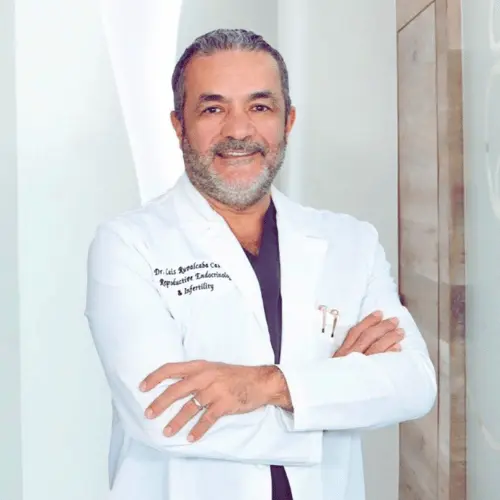
Life IVF Center is led by reproductive endocrinologists who hold board certification from the American Board of Obstetrics and Gynecology (ABOG) in both Obstetrics & Gynecology and in Reproductive Endocrinology & Infertility, the subspecialty certification that requires completion of an accredited REI fellowship after OB/GYN residency.
The clinical team includes physicians supported by nursing staff experienced in cycle coordination, patient monitoring, and medication instruction. The embryology laboratory staff handles fertilization, extended culture, embryo biopsy, and cryopreservation in-house. Patients who want a foundational understanding of what to expect before a first consultation may find it helpful to review our guide to IVF treatment.
Services and Treatments
Life IVF Center offers a comprehensive range of assisted reproductive technology services:
- In vitro fertilization (IVF) with individualized stimulation protocols
- Intracytoplasmic sperm injection (ICSI) for male factor or prior fertilization failure
- Intrauterine insemination (IUI) with ovulation monitoring
- Ovulation induction with oral agents (letrozole, Clomid) and injectable gonadotropins
- Egg freezing (oocyte cryopreservation) for elective fertility preservation
- Embryo cryopreservation and frozen embryo transfer (FET)
- Preimplantation genetic testing for aneuploidies (PGT-A)
- Preimplantation genetic testing for monogenic disease (PGT-M)
- Donor egg IVF using frozen egg banks or coordinated fresh donor cycles
- Donor sperm services and therapeutic donor insemination
- Gestational carrier coordination
- Male infertility evaluation, including semen analysis and sperm DNA fragmentation testing
- Recurrent pregnancy loss (RPL) workup and management
- Ovarian reserve assessment (AMH, FSH, antral follicle count ultrasound)
Laboratory and Success Rates
Life IVF Center operates an on-site IVF laboratory equipped for the full spectrum of embryology procedures: conventional insemination, ICSI, time-lapse embryo monitoring, blastocyst culture, trophectoderm biopsy for PGT, vitrification (fast-freeze), and thawing for frozen embryo transfers. SART membership and the reporting obligations that come with it mean the clinic's cycle data are submitted annually to an independent database that allows patients to compare outcomes across practices.
Patients should review the most current cycle-level data published by the CDC's ART Surveillance program and the SART Clinic Summary Report.
When interpreting success rates, patients are encouraged to look beyond headline percentages. Live birth rate per intended egg retrieval (rather than per transfer) is the most comprehensive metric, because it accounts for cycles that did not produce transferable embryos. Age at retrieval, ovarian reserve, and prior IVF history are the primary determinants of individual prognosis and may differ significantly from aggregate clinic statistics.
Patient Experience
Patient reviews of Life IVF Center emphasize the approachability of the clinical team and the thoroughness of the consultation process. Several reviewers describe receiving detailed explanations of their diagnosis and proposed treatment plan, which they found useful in setting realistic expectations before beginning a cycle. The Irvine location's proximity to the 405 freeway is mentioned by commuters from across Orange County and from communities along the South Bay, who note the accessibility relative to clinics further north in the Los Angeles Basin.
Multilingual access is a recurring positive theme in patient feedback, particularly from patients who found the availability of Mandarin- or Vietnamese-speaking staff meaningful during emotionally demanding phases of treatment. Wait times for appointments are generally described as reasonable relative to high-volume practices in Los Angeles, and the clinic's coordination team is noted for responsiveness during monitoring windows.
Considering At-Home Insemination?
Not every fertility journey begins in a clinic. At-home intracervical insemination (ICI) is a lower-cost, private option that suits patients with no known fertility diagnosis — including single parents by choice, same-sex couples, and people who want to try a few cycles before committing to clinical treatment.
At-home insemination kits like those from MakeAMom come with step-by-step instructions designed for donor or partner sperm. Kits are a one-time purchase that can be reused until conception succeeds, require no clinic visit, and arrive in plain, discreet packaging. Many patients use them as a first step while working toward a fertility consultation — or alongside ovulation tracking while they wait for an appointment slot.
If you have a known fertility diagnosis, have been trying for 12 months without success (six months if you're over 35), or your physician has already recommended IUI or IVF, a board-certified reproductive endocrinologist is the right next step.
Insurance and Financing
California does not have a comprehensive state mandate requiring private insurance plans to cover IVF. However, California law (SB 600, effective January 1, 2024) requires that large group and individual market plans that cover maternity services must also cover fertility preservation services for patients facing iatrogenic infertility (i.e., infertility caused by medical treatment such as chemotherapy). This is distinct from IVF coverage for fertility diagnoses unrelated to medical treatment.
For patients without qualifying coverage, Life IVF Center's financial team can outline self-pay pricing, multi-cycle packages, and financing through third-party lenders. Medication assistance programs — including those through RESOLVE and manufacturer patient assistance programs for gonadotropins — may reduce out-of-pocket drug costs. Patients are advised to request a written cost estimate covering stimulation monitoring, egg retrieval, laboratory fees, embryo culture, PGT if planned, and the embryo transfer cycle before committing to a treatment plan.
Frequently Asked Questions
Does Life IVF Center offer services for same-sex couples and single parents by choice? Yes. Life IVF Center provides services including donor sperm insemination, donor egg IVF, reciprocal IVF for same-sex female couples, and gestational carrier coordination. The clinical team has experience with the specific medical and logistical considerations that apply to LGBTQ+ family building and single-parent pathways.
What is the difference between PGT-A and PGT-M? PGT-A (preimplantation genetic testing for aneuploidies) screens embryos for the correct number of chromosomes. Chromosomal abnormality is the leading cause of implantation failure and miscarriage in IVF, and PGT-A is commonly recommended for patients over 37 or those with recurrent loss. PGT-M (preimplantation genetic testing for monogenic disease) screens for a specific single-gene mutation known to be carried by one or both partners, such as cystic fibrosis, BRCA1/2, or sickle cell disease. Both tests require embryo biopsy at the blastocyst stage, followed by analysis at a reference genetics laboratory.
How soon after egg retrieval can a frozen embryo transfer occur? The timing depends on the treatment protocol and laboratory results. If PGT is performed, a biopsy is sent to the genetics lab after embryos reach blastocyst, and results typically return in one to two weeks. The FET itself is then scheduled in a subsequent menstrual cycle, either on a natural cycle with ovulation monitoring or a medicated protocol with estrogen and progesterone priming. Total elapsed time from retrieval to transfer is commonly four to eight weeks.
How do I schedule a new patient consultation at Life IVF Center? New patients can contact Life IVF Center through the website at lifeivfcenter.com or by calling the Irvine office directly. Initial consultations typically include a review of prior records, baseline hormone testing, transvaginal ultrasound, and a care planning conversation with the reproductive endocrinologist.