
Reproductive Partners Fertility Center — An Honest Editorial Review
Perched within the XiMED Medical Center on the Scripps Memorial Hospital campus in La Jolla, Reproductive Partners Fertility Center – San Diego (RPSD) occupies one of the most medically dense corridors in North San Diego County. The clinic sits roughly a mile from the Pacific Ocean, serving patients drawn from La Jolla itself, the greater San Diego metro, the Inland Empire, and increasingly from out-of-state patients who prioritize proximity to one of California's premier academic medical environments. Founded in 1998 by Dr. V. Gabriel Garzo and Dr. David Meldrum, RPSD has built its reputation over more than 27 years as a physician-founded, physician-owned practice with deep ties to the University of California, San Diego — a relationship that positions it as the only academic-affiliated fertility center in the San Diego region. The clinic earned a listing among Newsweek's Best Fertility Clinics and was voted "Best Fertility Center in San Diego" by San Diego Magazine readers for 2025. Across major review platforms, RPSD carries a strong 4.6-star Google rating based on over 192 reviews — a consistent signal of patient satisfaction across an emotionally high-stakes specialty. For patients evaluating fertility clinics in California, RPSD represents one of the strongest long-tenured options in Southern California.
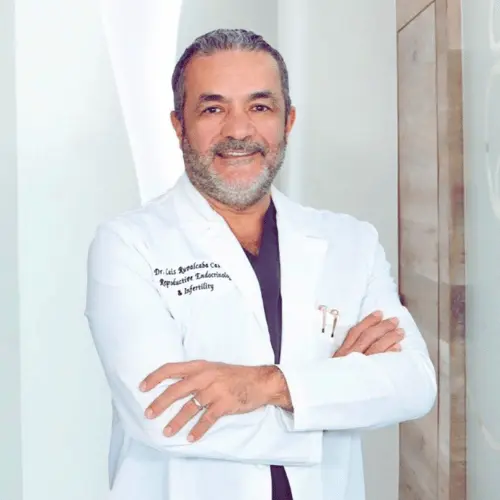
Physicians and Clinical Team
Reproductive Partners Fertility Center – San Diego's clinical team is built around double board-certified reproductive endocrinologists who personally perform every procedure — a practice philosophy that distinguishes the clinic from larger corporate network models where nurse practitioners or junior fellows often execute retrievals and transfers.
V. Gabriel Garzo, MD — Dr. Garzo is the clinic's Medical Director and a co-founder of RPSD. He earned his medical degree from the University of Chile, completed a residency in General Surgery at the University of Manitoba, and a residency in Obstetrics and Gynecology at Toronto General Hospital. He then completed a fellowship in Reproductive Endocrinology and Infertility at the Department of Reproductive Medicine, University of California, San Diego — the same institution he has been affiliated with throughout his career. He holds an additional position as a Research Fellow at the Banting and Best Department of Medical Research at the University of Toronto. Board-certified in Reproductive Endocrinology and Infertility since 1989, Dr. Garzo is a Clinical Professor in the Department of Obstetrics, Gynecology and Reproductive Sciences at UC San Diego and has been on staff at Scripps Memorial Hospital, La Jolla, for decades. He co-pioneered the delivery of San Diego County's first baby born from Preimplantation Genetic Diagnosis (PGD) in 2001 and is recognized as a pioneer in elective single embryo transfer in the region.
Jamie Stanhiser, MD, MSCR — Dr. Stanhiser holds dual board certifications in Obstetrics and Gynecology and Reproductive Endocrinology and Infertility. Her master's degree in clinical research reflects an academic orientation that complements the clinic's UC San Diego affiliation, and she practices with a focus on individualized, evidence-based treatment planning.
Li-Shei Lin, MD, PhD — Dr. Lin brings combined clinical and research training to the team, holding both an MD and a doctorate. Her dual-degree background reflects the clinic's emphasis on integrating laboratory science with clinical care — a natural fit for a practice that operates its own on-site embryology facility.
Wendy Chang, MD — Dr. Chang completed her undergraduate degree in Biology at UCLA and her medical degree at the University of California, Davis. She then pursued one of the most rigorous residency training pathways available, completing her Obstetrics, Gynecology, and Reproductive Medicine residency at Harvard Medical School across Brigham and Women's Hospital, Massachusetts General Hospital, and Boston Children's Hospital. She completed a three-year fellowship in Reproductive Endocrinology and Infertility at UCLA's David Geffen School of Medicine. Dr. Chang joined RPSD in early 2024, expanding the clinic's capacity to serve growing patient demand.
Carrie Wambach, MD — Dr. Wambach completed both her Ob/Gyn residency and a prestigious three-year fellowship in Reproductive Endocrinology and Infertility at UCLA, and is double board-certified in Obstetrics and Gynecology and Reproductive Endocrinology and Infertility. She is known among patients for her compassionate, detailed approach to treatment planning.
The broader team includes experienced embryologists, reproductive nurses, and financial counselors who guide patients through the administrative and insurance dimensions of care.
Services and Treatments
RPSD offers a comprehensive menu of reproductive medicine services covering the full spectrum from initial diagnostics through complex third-party reproduction:
- In Vitro Fertilization (IVF) — The clinic's primary treatment modality, with a physician-performed retrieval and transfer model and an emphasis on elective single embryo transfer (eSET)
- Intrauterine Insemination (IUI) — Including ovarian stimulation, ultrasound monitoring, and the IUI procedure itself
- Egg Freezing and Fertility Preservation — Using vitrification (rapid freezing), the most clinically successful egg preservation technique currently available; the clinic performed the first successful pregnancy from frozen eggs in San Diego
- Embryo Freezing and Frozen Embryo Transfer (FET)
- Preimplantation Genetic Testing (PGT-A and PGT-M) — Aneuploidy screening to reduce chromosomal abnormalities and single-gene disorder testing
- Donor Egg Cycles — An established program for patients with diminished ovarian reserve, prior poor response, or genetic considerations
- Donor Sperm and Donor Embryo
- Gestational Surrogacy and Third-Party Reproduction
- LGBTQ+ Family Building — Including reciprocal IVF for female couples and donor-sperm pathways for gay male couples
- Male Fertility Evaluation and Sperm Preservation
- Oncofertility — Fertility Preservation for Cancer Patients
- Recurrent Pregnancy Loss Evaluation and Management
For a detailed walkthrough of the IVF process and what to expect at each stage of treatment, see our IVF treatment guide.
Laboratory and Success Rates
RPSD's in-house embryology laboratory is a central pillar of its clinical identity. The lab is staffed by what the practice describes as one of the most experienced embryology teams in California — a claim backed by a multi-decade track record with technologies including vitrification, ICSI, and PGT. Operating the lab in-house rather than contracting externally allows for tighter quality control and continuity of care, which matters significantly for outcomes in a field where minor variations in lab environment can affect embryo viability.
The clinic's success rates consistently exceed national averages, a performance validated by the Society for Assisted Reproductive Technology (SART) Clinic Summary Report. RPSD has been recognized by SART for achieving above-average outcomes while maintaining a disciplined approach to the number of embryos transferred — a reflection of their commitment to eSET and patient safety over headline conception statistics. CDC ART data for the clinic is also publicly available through the CDC's Assisted Reproductive Technology national report, which provides independently audited cycle-level outcome data organized by patient age and diagnosis. Under-35 live birth rates from IVF cycles have been reported at approximately 57.5%, and cryopreservation outcomes rank in the top 2% nationally by independent scoring models.
Patient Experience
RPSD's 4.6-star Google rating across more than 192 reviews reflects a consistent pattern: patients feel cared for as individuals rather than processed as case numbers. The clinic is physician-founded and physician-owned, which structurally distinguishes it from corporate-network models where financial incentives and procedural volume can crowd out the physician-patient relationship. Patients frequently highlight that physicians review their medical histories in depth before consultations, answer questions without rushing, and remain accessible across the arc of a treatment cycle.
The La Jolla campus location within the XiMED Medical Center on the Scripps Memorial Hospital grounds provides patients access to a medical environment that feels clinical without being cold — the building is modern and well-maintained, co-located with a range of specialist and support practices that can be useful for patients managing complex reproductive diagnoses alongside other health needs. Office hours run weekdays from 8:00 AM to 4:30 PM, and the central San Diego County location is accessible from coastal communities, Mission Valley, the North County corridor, and Interstate 5.
Patient testimonials describe the care team as "knowledgeable, talented, and empathetic," and the practice has earned a reputation for taking seriously the emotional weight of fertility treatment — a dimension that patients undergoing repeated cycles or pregnancy loss identify as particularly meaningful. Staff are consistently described as warm, organized, and communicative.
Considering At-Home Insemination?
Not every fertility journey begins in a clinic. At-home intracervical insemination (ICI) is a lower-cost, private option that suits patients with no known fertility diagnosis — including single parents by choice, same-sex couples, and people who want to try a few cycles before committing to clinical treatment.
At-home insemination kits like those from MakeAMom come with step-by-step instructions designed for donor or partner sperm. Kits are a one-time purchase that can be reused until conception succeeds, require no clinic visit, and arrive in plain, discreet packaging. Many patients use them as a first step while working toward a fertility consultation — or alongside ovulation tracking while they wait for an appointment slot.
If you have a known fertility diagnosis, have been trying for 12 months without success (six months if you're over 35), or your physician has already recommended IUI or IVF, a board-certified reproductive endocrinologist is the right next step.
Insurance and Financing
California enacted one of the country's stronger fertility insurance mandate frameworks, and patients with employer-sponsored plans through carriers operating in California should verify their infertility benefits before assuming out-of-pocket costs will be prohibitive. RPSD has been recognized by United Healthcare/OPTUM as an Infertility Center of Excellence — a designation that can affect preferred network status and cost-sharing for UHC policyholders. The clinic also accepts Cigna and Aetna among other major PPO and POS plans.
For patients whose insurance does not cover fertility treatment, or for those facing gaps between covered and uncovered services, RPSD's financial counselors are available to review benefits, explain out-of-pocket exposure, and identify financing options. The clinic's Fertility Financing Program guides patients through the full financial picture, including third-party lending programs that can spread treatment costs over time. An IVF cycle in California typically ranges from $15,000 to $22,000 before medications and genetic testing; the specific structure of what RPSD charges for bundled versus unbundled services is best confirmed directly with the financial team during the initial consultation. For context on how California's insurance landscape compares to other states, see our full guide to fertility clinics in California.
Frequently Asked Questions
What makes Reproductive Partners Fertility Center – San Diego different from other San Diego fertility clinics? RPSD is the only academic-affiliated fertility center in San Diego, operating in partnership with the Department of Reproductive Medicine at UC San Diego. It was co-founded in 1998 by fellowship-trained physician Dr. V. Gabriel Garzo, making it one of the longest-running independent fertility practices in the region. The clinic is physician-owned, meaning physicians personally perform all procedures rather than delegating to mid-level practitioners.
Does RPSD offer egg freezing, and how successful is it? Yes. RPSD was the first fertility clinic in San Diego to achieve a successful pregnancy from frozen eggs, and egg freezing remains a core offering. The clinic uses vitrification — the gold-standard rapid-freezing method — and reports cryopreservation outcomes in the top 2% nationally according to independent benchmarking.
Is the clinic affiliated with SART, and where can I find their success rate data? Yes. RPSD is a SART-member clinic, and outcome data is publicly available through the SART Clinic Summary Report database. The clinic's reported outcomes have consistently exceeded national averages, including above-average live birth rates for patients under 35.
Does Reproductive Partners Fertility Center accept insurance? The clinic accepts most major insurance plans including PPO and POS plans, and holds an Infertility Center of Excellence designation with United Healthcare/OPTUM. Patients should confirm their specific benefits and eligibility with the clinic's financial counselors before beginning treatment. Financial counseling appointments are available at no charge as part of the new patient intake process.