
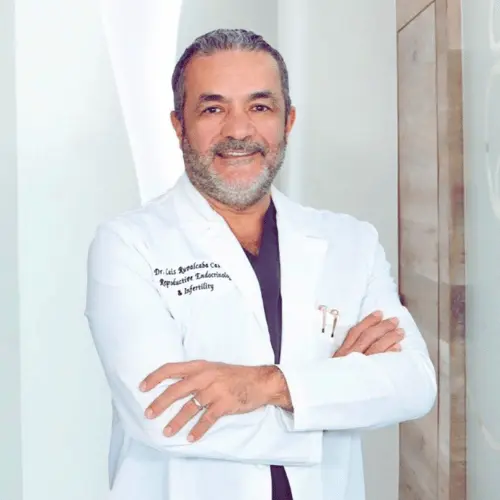
The Servy Institute for Reproductive Endocrinology — commonly known as S.I.R.E. — is located at 812 Chafee Avenue in Augusta, Georgia. One of the Southeast's established independent fertility clinics, S.I.R.E. has served patients from Augusta and the broader Central Savannah River Area (CSRA), including communities in South Carolina across the river in Aiken and North Augusta. Patients exploring fertility care options throughout Georgia can view additional providers in the Georgia fertility clinics directory.
Augusta's position as a mid-size city with a significant medical community — anchored by Augusta University Medical Center and the Medical College of Georgia — supports the infrastructure for specialized reproductive endocrinology care. S.I.R.E. has historically operated as an independent practice within this medical community, offering patients personalized care distinct from large national fertility networks.
Physicians and Clinical Team
S.I.R.E. carries the Servy name, reflecting the practice's founding by physicians committed to reproductive endocrinology as a subspecialty. The Servy Institute model has emphasized the integration of andrology (male reproductive medicine) alongside female fertility treatment — an approach that recognizes the significant contribution of male-factor diagnoses to infertility, which is implicated in approximately 40–50% of couples presenting for care.
Prospective patients should contact the practice directly to confirm current physician staffing, as independent practices can evolve over time. Board certification in reproductive endocrinology and infertility (REI) — a credential issued by the American Board of Obstetrics and Gynecology — is the standard qualification to ask about when evaluating any fertility physician.
The clinical support team typically includes fertility nurses who manage cycle monitoring and patient communication, embryologists responsible for the IVF laboratory, and ultrasound technicians performing transvaginal monitoring.
Services and Treatments
S.I.R.E. offers the core services expected of a reproductive endocrinology practice serving a regional patient population:
- Comprehensive fertility evaluation for women and men
- Hormonal assessment and ovarian reserve testing
- Andrology services including advanced semen analysis and sperm function testing
- Ovulation induction with oral and injectable medications
- Intrauterine insemination (IUI)
- In vitro fertilization (IVF)
- Intracytoplasmic sperm injection (ICSI)
- Sperm retrieval procedures for non-obstructive and obstructive azoospermia
- Embryo cryopreservation and frozen embryo transfer
- Preimplantation genetic testing (PGT-A)
- Egg and embryo freezing for fertility preservation
- Recurrent pregnancy loss evaluation
- Uterine and tubal factor evaluation
The emphasis on male-factor diagnosis and andrology services — suggested by the practice's historical mission — makes S.I.R.E. particularly relevant for couples where semen analysis findings are a primary or contributing factor.
Laboratory and Success Rates
IVF success in an independent clinic like S.I.R.E. depends on the quality and currency of the laboratory's equipment and embryology team. Ask specifically about the culture system used, whether the clinic has transitioned to vitrification (as opposed to slow-freeze) cryopreservation, and the experience level of the lead embryologist.
Patients should review the most current cycle-level data published by the CDC's ART Surveillance program and the SART Clinic Summary Report.
Independent practices sometimes have smaller annual cycle volumes than large network fertility centers. Smaller volume is not inherently a marker of lower quality — highly experienced small-team labs can produce excellent results — but volume does affect statistical reliability of published success rate figures.
Patient Experience
Augusta is a city of approximately 200,000 people, and S.I.R.E.'s position on Chafee Avenue places it within the city's established medical corridor. Patients from Aiken, North Augusta, and other South Carolina communities benefit from the clinic's proximity to the Georgia-South Carolina state line, and many have historically preferred S.I.R.E. to making the longer journey to Atlanta or Columbia for fertility care.
The independent practice model appeals to patients who want a more personal relationship with their physician team than is typically available at large multi-site fertility networks. In smaller practices, patients are more likely to see the same nurses and physicians across their entire treatment course — a continuity that many patients find emotionally important.
Ask about the practice's hours for monitoring appointments, how results are communicated on cycle monitoring days, and whether the clinic has partnerships with local pharmacies for fertility medication dispensing.
Considering At-Home Insemination?
Not every fertility journey begins in a clinic. At-home intracervical insemination (ICI) is a lower-cost, private option that suits patients with no known fertility diagnosis — including single parents by choice, same-sex couples, and people who want to try a few cycles before committing to clinical treatment.
At-home insemination kits like those from MakeAMom come with step-by-step instructions designed for donor or partner sperm. Kits are a one-time purchase that can be reused until conception succeeds, require no clinic visit, and arrive in plain, discreet packaging. Many patients use them as a first step while working toward a fertility consultation — or alongside ovulation tracking while they wait for an appointment slot.
If you have a known fertility diagnosis, have been trying for 12 months without success (six months if you're over 35), or your physician has already recommended IUI or IVF, a board-certified reproductive endocrinologist is the right next step.
Insurance and Financing
Georgia does not have a state infertility insurance mandate for private employers. Coverage for fertility treatment depends entirely on the patient's employer plan — some large Georgia employers voluntarily include fertility benefits, but many do not. Diagnostic services (initial bloodwork, semen analysis, imaging) are typically covered under general medical benefits.
Patients at S.I.R.E. who are self-paying or whose insurance does not cover fertility treatment should ask during their financial consultation about:
- Self-pay pricing for IUI and IVF cycles
- Multi-cycle package discounts
- Payment plans or third-party healthcare financing
- Medication cost estimates and specialty pharmacy recommendations
South Carolina patients should also check their state's coverage situation — South Carolina similarly does not mandate IVF coverage for private employers.
Frequently Asked Questions
What is andrology, and why does it matter for fertility care? Andrology is the subspecialty of medicine focused on male reproductive health, including sperm production, sperm function, hormonal causes of male infertility, and surgical sperm retrieval. S.I.R.E.'s historical emphasis on andrology means the practice is equipped to evaluate and treat male-factor infertility — diagnosed through semen analysis and, where indicated, testicular biopsy or hormonal workup — rather than attributing all fertility challenges to the female partner.
Can patients from South Carolina be seen at S.I.R.E. in Augusta? Yes. Augusta's proximity to the South Carolina border makes S.I.R.E. a practical option for patients in Aiken, North Augusta, and surrounding communities. Patients should verify that the clinic accepts their insurance plan (if applicable), as out-of-state plan networks can be more complex to navigate.
How is the Servy Institute different from Atlanta-based fertility centers? As an independent Augusta-based practice, S.I.R.E. offers localized care without requiring CSRA patients to travel to Atlanta — a drive of approximately two hours. For patients who need frequent monitoring appointments during an IVF cycle, proximity to the clinic is a significant practical consideration. The independent model also typically allows for more personal physician-patient relationships than large network centers.
What should I expect at my first fertility consultation? A new patient consultation typically includes a detailed medical history review, discussion of your reproductive history and any prior fertility evaluations, an initial physical examination, review of any prior semen analysis or imaging, and a discussion of recommended next diagnostic steps. If you have prior workup results from another provider, bring them to your first visit. The consultation is also an appropriate time to ask about physician credentials, cycle logistics, and financial expectations.