
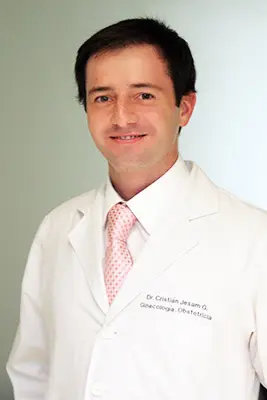
Terra Fertility, located at 45 Stergis Way in Dedham, Massachusetts, is a dedicated fertility practice serving patients in the southern Boston suburbs and greater metro Boston area. Patients who research this address should be aware that 45 Stergis Way is also the location of Fertility Solutions — a separate fertility practice with its own physicians, NPI numbers, and clinical entity. Terra Fertility and Fertility Solutions are distinct practices sharing a professional building at the same address; patients seeking care at Terra Fertility should confirm directly with the practice (terrafertility.com) to ensure they are scheduling with the correct entity. Massachusetts fertility patients can also explore the Massachusetts fertility clinic directory.
Physicians and Clinical Team
Terra Fertility is structured around a boutique, patient-centered model of care — an approach that contrasts with the high-volume model common at larger network practices. Board-certified reproductive endocrinologists at Terra Fertility hold fellowship training from ACGME-accredited programs and carry the full credential pathway: OB/GYN residency, three-year subspecialty fellowship, and ABOG board certification in reproductive endocrinology and infertility. The practice's emphasis on individualized care means patients typically experience consistent physician relationships throughout their treatment cycle, rather than rotating through multiple providers.
The clinical staff includes reproductive nurses who coordinate cycle monitoring and patient communication, sonographers experienced in transvaginal ultrasound for reproductive assessment, embryologists managing the laboratory phase of IVF, and administrative staff who support insurance navigation under Massachusetts' fertility mandate. Boutique fertility practices in competitive markets like greater Boston often differentiate on service quality — shorter wait times for appointments, direct physician access, and a more intimate clinical atmosphere — which patients find valuable when navigating the emotional demands of infertility treatment.
Services and Treatments
Terra Fertility offers a comprehensive suite of reproductive medicine services, including:
- Initial fertility consultation and thorough diagnostic evaluation
- Ovarian reserve assessment (AMH, antral follicle count, FSH, estradiol)
- Semen analysis and male-factor evaluation
- Ovulation induction with oral and injectable protocols
- Intrauterine insemination (IUI) with cycle monitoring
- In vitro fertilization (IVF)
- Intracytoplasmic sperm injection (ICSI)
- Preimplantation genetic testing (PGT-A, PGT-M)
- Frozen embryo transfer (FET)
- Egg freezing (oocyte cryopreservation) for fertility preservation
- Donor sperm coordination
- Recurrent pregnancy loss evaluation and management
- Hormonal and thyroid evaluation for reproductive function
Laboratory and Success Rates
Terra Fertility's laboratory operations support the full IVF cycle: egg collection, fertilization, embryo culture, grading, genetic biopsy, and vitrification. Modern IVF labs use time-lapse embryo monitoring systems and precisely controlled culture environments to optimize blastocyst development. Vitrification has become the gold standard for cryopreservation, producing post-thaw survival rates that rival fresh embryo outcomes in most patient populations.
Patients should review the most current cycle-level data published by the CDC's ART Surveillance program and the SART Clinic Summary Report.
Patient Experience
The Dedham location at 45 Stergis Way is accessible from I-95 (Route 128) at Exit 16A/B and is conveniently situated for patients coming from West Roxbury, Roslindale, Canton, Norwood, Westwood, Sharon, and the southern Boston suburbs. Dedham is a well-served medical community, and the Stergis Way professional complex is a calm, low-key setting appropriate for a sensitive specialty like reproductive medicine.
Terra Fertility's boutique positioning is deliberate: the practice is designed for patients who value a more personal experience and consistent provider relationships. For patients who feel lost or depersonalized in high-volume fertility centers, a smaller practice with a strong continuity-of-care model can meaningfully improve the treatment experience. The brand name itself — "Terra," Latin for earth — evokes groundedness, fertility, and the natural world, consistent with a practice philosophy centered on patient-centered care.
The Dedham area patient population is diverse, drawing from Boston's working-class neighborhoods as well as the more affluent southern suburbs. Terra Fertility's model should accommodate patients across a range of socioeconomic and cultural backgrounds, and the Massachusetts mandate substantially reduces the financial barriers that would otherwise limit access to care.
Considering At-Home Insemination?
Not every fertility journey begins in a clinic. At-home intracervical insemination (ICI) is a lower-cost, private option that suits patients with no known fertility diagnosis — including single parents by choice, same-sex couples, and people who want to try a few cycles before committing to clinical treatment.
At-home insemination kits like those from MakeAMom come with step-by-step instructions designed for donor or partner sperm. Kits are a one-time purchase that can be reused until conception succeeds, require no clinic visit, and arrive in plain, discreet packaging. Many patients use them as a first step while working toward a fertility consultation — or alongside ovulation tracking while they wait for an appointment slot.
If you have a known fertility diagnosis, have been trying for 12 months without success (six months if you're over 35), or your physician has already recommended IUI or IVF, a board-certified reproductive endocrinologist is the right next step.
Insurance and Financing
Massachusetts' infertility insurance mandate is one of the most comprehensive in the United States. Under Massachusetts General Laws Chapter 175, Section 47H, state-regulated health plans covering employers with more than 25 employees must cover medically necessary fertility treatments, including IVF, IUI, and other ART procedures. For patients with qualifying coverage, most or all of the cost of treatment cycles — including monitoring, egg retrieval, laboratory fees, and embryo transfer — should be covered, subject to plan-specific deductibles and copayments.
Terra Fertility's administrative team is experienced in working within the Massachusetts mandate framework and can assist patients with insurance verification, authorization letters, and appeals. Patients whose employers self-insure their health plan (common at large corporations) should verify whether the mandate applies, as ERISA-governed self-insured plans are not required to comply with state mandates. For patients without coverage, financial counseling and third-party financing options remain available. Medication costs, which range from $3,000–$6,000 per stimulation cycle, may be partially covered by pharmaceutical assistance programs.
Frequently Asked Questions
How is Terra Fertility different from Fertility Solutions, which is at the same address? Terra Fertility and Fertility Solutions are two entirely separate medical practices that occupy space within the same professional building at 45 Stergis Way, Dedham. They have distinct physician teams, separate NPI numbers, independent billing entities, and their own clinical brands and websites. Patients should confirm they are scheduling with the correct practice by using Terra Fertility's website (terrafertility.com) and verifying their appointment details directly with that practice.
What does "boutique" fertility care mean in practice? Boutique fertility care typically refers to a smaller-scale practice model that prioritizes continuity of care (you see the same physician consistently), shorter appointment wait times, more direct access to the physician team, and a more personalized experience overall. The tradeoff may be a smaller laboratory or fewer on-site ancillary services compared to a large network clinic, but for many patients the quality of the personal relationship with their care team outweighs these considerations.
Does the Massachusetts mandate cover egg freezing? The Massachusetts mandate covers medically necessary infertility treatment. Social egg freezing (elective fertility preservation without a medical indication) may or may not be covered depending on the specific plan. Egg freezing for patients undergoing cancer treatment or other medical procedures that threaten ovarian function (oncofertility) is more likely to be covered as a medical necessity. Patients should review their plan terms or ask the clinic's billing team for specific guidance.
How long does a typical IVF cycle take at a boutique practice? The timeline for an IVF cycle is generally the same regardless of practice size: stimulation phase of 10–14 days, egg retrieval, laboratory phase (3–5 days to blastocyst), optional PGT results (1–2 weeks), and embryo transfer (which may be fresh or in a separate frozen embryo transfer cycle). Boutique practices often offer more flexible scheduling for monitoring appointments, which can reduce the logistical burden for patients with demanding work or family schedules.