
Fertility Specialists of Houston (FSH) is located at 7900 Fannin St, Houston, TX 77054, within the Texas Medical Center — the largest medical complex in the world by square footage and home to more than 60 institutions including MD Anderson Cancer Center, Texas Children's Hospital, and Houston Methodist. The 7900 Fannin St address places the practice in the heart of this medical ecosystem, accessible from the South Main/Fannin St medical corridor and within walking distance of the Dryden/TMC Metro Rail station on the Red Line. The practice website is at infertilityivfhouston.com and the clinic holds a 4.2-star rating across 85 reviews. Texas has no state infertility insurance mandate, and the practice is listed among Texas fertility clinics.
The Texas Medical Center location distinguishes FSH from fertility practices in suburban Houston corridors. Patients who are receiving oncologic care at TMC institutions, or who are already established at other Medical Center hospitals, often find the convenience of a fertility consult within the same campus meaningful — particularly for oncofertility cases where timing before chemotherapy or radiation is critical.
Physicians and Clinical Team
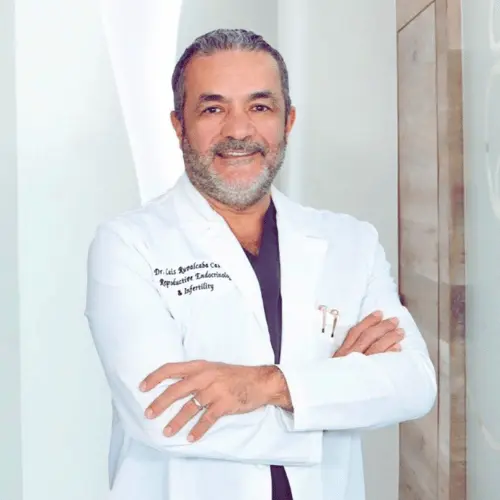
Fertility Specialists of Houston is led by board-certified reproductive endocrinologists who hold ABOG dual certification in Obstetrics & Gynecology and in Reproductive Endocrinology & Infertility. ASRM membership and SART participation are professional standards maintained by the physician team, with the latter requiring annual submission of cycle outcome data to an independently validated national database.
The clinical team includes nurses with experience in IVF cycle coordination, monitoring management, and patient support during active treatment cycles. The embryology laboratory is an integral part of the FSH practice, handling fertilization through final cryopreservation in-house. Patients approaching their first fertility consultation can review our guide to IVF treatment to understand what to expect during stimulation, egg retrieval, and embryo transfer.
Services and Treatments
Fertility Specialists of Houston offers a full range of ART services:
- In vitro fertilization (IVF) with individualized controlled ovarian stimulation
- Intracytoplasmic sperm injection (ICSI) for male factor and fertilization concerns
- Intrauterine insemination (IUI) with or without ovulation induction
- Egg freezing (oocyte cryopreservation) for elective and oncofertility preservation
- Embryo cryopreservation and frozen embryo transfer (FET)
- Preimplantation genetic testing for aneuploidies (PGT-A)
- Preimplantation genetic testing for monogenic disorders (PGT-M)
- Donor egg IVF through frozen egg banks and fresh donor programs
- Donor sperm services and therapeutic donor insemination (TDI)
- Gestational carrier coordination and surrogacy support
- Recurrent pregnancy loss evaluation and treatment
- Male fertility evaluation including semen analysis and sperm DNA fragmentation
- Oncofertility — expedited fertility preservation for cancer patients
- Ovarian reserve assessment (AMH, FSH, antral follicle count)
- Uterine evaluation via hysteroscopy and saline infusion sonography (SIS)
Laboratory and Success Rates
The FSH IVF laboratory at the Fannin St location supports the full embryology workflow: ICSI, blastocyst culture, trophectoderm biopsy for genetic testing, vitrification, and warming for frozen transfer cycles. SART membership subjects the clinic's annual ART data to external review and publication through the SART Clinic Summary Report.
Patients should review the most current cycle-level data published by the CDC's ART Surveillance program and the SART Clinic Summary Report.
The Texas Medical Center's concentration of academic and clinical institutions creates a referral ecosystem that means FSH may see a higher proportion of complex cases — patients with a history of failed cycles at other centers, or complex ovarian or uterine factors — compared with a suburban practice serving a more generalized infertility population. Complex case mix can affect aggregate success rate statistics; patients should discuss their individual prognosis rather than relying solely on population-level percentages.
Patient Experience
Patients at Fertility Specialists of Houston frequently note the advantages of the TMC location, particularly those who are coordinating fertility care with oncology, hematology, or gynecologic surgery at neighboring Medical Center institutions. The ability to have monitoring appointments, consultations, and cancer-treatment-adjacent fertility care within the same geographic campus reduces logistical burden during already stressful medical periods.
Reviews describe the clinical staff as knowledgeable and the practice as well-suited to handling complicated fertility cases. Some patients note that the Fannin St and Medical Center corridor can be congested during peak hours, and that parking — while available in the TMC parking structures — adds a logistical element relative to suburban clinic locations. The Red Line Metro Rail stop at Dryden/TMC provides a car-free option for patients who commute from points along the Main St corridor.
Considering At-Home Insemination?
Not every fertility journey begins in a clinic. At-home intracervical insemination (ICI) is a lower-cost, private option that suits patients with no known fertility diagnosis — including single parents by choice, same-sex couples, and people who want to try a few cycles before committing to clinical treatment.
At-home insemination kits like those from MakeAMom come with step-by-step instructions designed for donor or partner sperm. Kits are a one-time purchase that can be reused until conception succeeds, require no clinic visit, and arrive in plain, discreet packaging. Many patients use them as a first step while working toward a fertility consultation — or alongside ovulation tracking while they wait for an appointment slot.
If you have a known fertility diagnosis, have been trying for 12 months without success (six months if you're over 35), or your physician has already recommended IUI or IVF, a board-certified reproductive endocrinologist is the right next step.
Insurance and Financing
Texas has no state infertility insurance mandate. Fertility treatment coverage is determined entirely by individual employer plan design or personal insurance policy. Patients should contact their insurer to clarify what diagnostic testing, IUI, and IVF coverage, if any, their plan provides, and whether prior authorization is required.
FSH's financial team provides benefit verification, prior authorization support, and written cost estimates. Third-party healthcare financing through lenders such as Prosper Healthcare Lending is available for patients managing self-pay costs. Medication costs are a major out-of-pocket expense in any IVF cycle; patients should ask about the practice's pharmacy partnerships and available manufacturer assistance programs. Patients pursuing fertility preservation for cancer treatment may have a distinct coverage pathway through their oncology plan; the FSH team is experienced in navigating these coverage intersections.
Frequently Asked Questions
Is FSH the same practice as the Houston Fertility Institute at 6400 Fannin St? No. Fertility Specialists of Houston at 7900 Fannin St and the Houston Fertility Institute at 6400 Fannin St are distinct entities with different NPIs, different practice identities, and potentially different physician teams, even though both practices are on Fannin St within the Texas Medical Center corridor. Patients should confirm which specific clinic they are contacting when scheduling appointments.
Does Fertility Specialists of Houston have oncofertility expertise? Yes. Being located within the Texas Medical Center — adjacent to MD Anderson, Houston Methodist, and other major cancer treatment centers — makes FSH a natural referral destination for patients needing fertility preservation before cancer treatment. Oncofertility cases are typically prioritized for rapid consultation given the time sensitivity of initiating a cycle before chemotherapy or radiation begins.
What is the process for transferring care from another Houston fertility clinic to FSH? Patients wishing to transfer care should request their complete records from the prior practice, including all laboratory results, cycle summaries, embryology reports, and imaging studies. FSH can review prior cycle data during a new patient consultation and recommend whether protocol modifications are warranted before beginning a new cycle.
How do I get to the 7900 Fannin St location by public transit? The Metro Rail Red Line stops at Dryden/TMC, which is within the Texas Medical Center campus and approximately a short walk from the Fannin St medical buildings. Patients taking Metro from downtown Houston or from points north along Main St can use this stop. TMC also has a shuttle system linking various campus buildings; check the TMC visitor transportation resources for current routes.