Florida Fertility Institute (Tampa) — An Honest Editorial Review
Tampa Bay's fertility care landscape has become increasingly competitive in recent years. Patients in the region now have several established options, including Shady Grove Fertility Tampa Bay and Reproductive Medicine Group in Brandon — both of which we have covered in separate editorials. Florida Fertility Institute, operating under the brand Tampa Bay Infertility Experts, represents one of the area's longest-tenured independent practices. With locations in both Tampa and Clearwater, the clinic markets itself on depth of experience and individualized care — a deliberate positioning against larger network-affiliated competitors. For patients evaluating fertility clinics in Florida, understanding what differentiates this clinic from its neighbors is essential before committing to a treatment plan.
Physicians and Clinical Team
Florida Fertility Institute's clinical identity rests on a small, experienced team of fellowship-trained reproductive endocrinologists and infertility specialists (REIs). The practice was built around subspecialty expertise from the outset, and both current physicians hold the dual board certifications that define the field's highest standard of training.
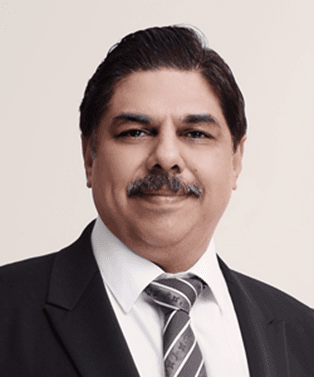
Dr. Edward A. Zbella, MD is the clinic's founding physician and the longest-tenured REI in the practice. He earned his medical degree from the University of Illinois at Chicago College of Medicine and completed his fellowship training in reproductive endocrinology and infertility at Michael Reese Hospital and Medical Center in Chicago. Dr. Zbella has been practicing since the mid-1980s, giving him a clinical track record that spans multiple generations of assisted reproductive technology. That depth is genuinely unusual; most practicing REIs in the United States entered the field decades after the first IVF births in the early 1980s. His areas of focus include IVF, microsurgical tubal reversal, and complex cases involving prior treatment failures.
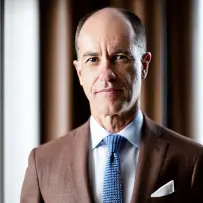
Dr. Mark D. Sanchez, MD, FACOG is the clinic's second physician, bringing academic credentials alongside clinical practice. He is board certified in obstetrics and gynecology and holds subspecialty certification in reproductive endocrinology and infertility. Dr. Sanchez holds an appointment as Assistant Professor at Florida State University's College of Medicine and serves as an Adjunct Professor at Nova Southeastern University's Physician Assistant School — connections that keep the practice anchored to current evidence and emerging research. He also serves as Associate Program Director for the Reproductive Endocrinology program at Brandon Regional Hospital. Patients frequently note that he takes time to explain treatment rationale in accessible terms.
Dr. Yissa Fonticiella, MD, FACOG rounds out the physician team. A board-certified OBGYN with focused training in reproductive care, she completed her medical degree at Ross University School of Medicine and her residency at Bayfront Health in St. Petersburg, Florida. Dr. Fonticiella was selected as a CREST Scholar through a competitive program co-sponsored by the American Society for Reproductive Medicine (ASRM), the National Institutes of Child Health and Human Development (NICHD), and Duke Clinical Research — a distinction that reflects academic achievement and research commitment. She is fluent in Spanish, which extends the clinic's reach to Tampa Bay's significant Spanish-speaking patient population.
Services and Treatments
The practice covers the full continuum of reproductive medicine, from initial diagnostic workup through advanced assisted reproduction:
- IVF with ICSI — The core treatment offering, including intracytoplasmic sperm injection for male factor infertility. The clinic emphasizes individualized stimulation protocols over standardized approaches.
- Preimplantation Genetic Testing (PGT) — Embryo biopsy and chromosomal screening are available, allowing patients to transfer only genetically confirmed euploid embryos. This is particularly relevant for patients over 35 or those with prior miscarriage history.
- Intrauterine Insemination (IUI) — Offered for appropriate diagnoses including unexplained infertility, mild male factor, cervical factor, and single women or same-sex couples using donor sperm.
- Microsurgical Tubal Reversal — A specialty of Dr. Zbella's that sets the clinic apart from many competitors. The procedure reconnects the fallopian tubes after a prior ligation, and the clinic's experience in this area is notable for an independent practice.
- Egg Freezing (Oocyte Cryopreservation) — Available for both medical and elective fertility preservation, including oncofertility applications for patients facing cancer treatment.
- Donor Egg IVF — A full donor egg program for patients where ovarian reserve or egg quality presents a barrier to conventional IVF.
- Family Balancing / Gender Selection — The practice describes itself as offering the only family balancing program locally, using PGT-based embryo selection.
- LGBTQ+ Family Building — Services for same-sex couples and single individuals, including reciprocal IVF and donor sperm coordination.
- Telehealth Consultations — New patient consultations are available via telehealth, reducing barriers for patients coming from outside the immediate Tampa or Clearwater area.
For patients earlier in their evaluation, the practice offers comprehensive fertility testing including hormone panels, semen analysis, hysterosalpingography (HSG), and ultrasound assessment of ovarian reserve. The IVF guide on this site offers a detailed breakdown of what to expect from the diagnostic and stimulation phases of treatment.
Laboratory and Success Rates
The embryology laboratory is the functional core of any IVF program, and Florida Fertility Institute characterizes its laboratory as state-of-the-art — a phrase common in clinic marketing, but one that carries more weight when paired with consistent outcomes data. IVF cycles require the lab to support every step from egg retrieval through fertilization, embryo culture, biopsy, and cryopreservation. The clinic offers extended embryo culture to the blastocyst stage (day 5 or 6), assisted hatching, and frozen embryo transfer capabilities.
Based on data reported through third-party aggregators, the clinic's IVF success rates show meaningful variation by patient age — which is consistent with national norms across all programs. Reported live birth rates per retrieval cycle are approximately 42% for patients under 35, dropping to roughly 31% for patients ages 35–37, and significantly lower for patients over 38. These figures are broadly in line with national SART averages, though patients should note that individual outcomes depend heavily on diagnosis, ovarian reserve, embryo quality, and number of prior attempts. The clinic's own website acknowledges that success rates can be reported in multiple ways and that direct comparisons between clinics are methodologically complex — a candid and accurate characterization.
Patient Experience
Florida Fertility Institute runs a two-location practice: the primary Tampa office is located at 4728 North Habana Avenue, and a second location operates in Clearwater at 2454 N. McMullen Booth Road. The dual-site model serves patients across a wide swath of the Tampa Bay metro without requiring everyone to drive to a single hub. Office hours run Monday through Thursday, 8:00 a.m. to 4:30 p.m., and Friday mornings until noon — a standard fertility clinic schedule that accommodates monitoring appointments during stimulation cycles.
The practice positions itself on personalized service. New patients receive one-on-one consultations rather than group intake sessions, and the clinical team emphasizes individualized protocol design. Patient reviews on third-party platforms reflect a practice that performs well on care coordination and physician accessibility, with Dr. Sanchez and Dr. Fonticiella both drawing positive feedback for their communication style and explanations of treatment steps. As with any small practice, wait times and scheduling flexibility can vary during busy cycle periods.
Considering At-Home Insemination?
Not every fertility journey begins in a clinic. At-home intracervical insemination (ICI) is a lower-cost, private option that suits patients with no known fertility diagnosis — including single parents by choice, same-sex couples, and people who want to try a few cycles before committing to clinical treatment.
At-home insemination kits like those from MakeAMom come with step-by-step instructions designed for donor or partner sperm. Kits are a one-time purchase that can be reused until conception succeeds, require no clinic visit, and arrive in plain, discreet packaging. Many patients use them as a first step while working toward a fertility consultation — or alongside ovulation tracking while they wait for an appointment slot.
If you have a known fertility diagnosis, have been trying for 12 months without success (six months if you're over 35), or your physician has already recommended IUI or IVF, a board-certified reproductive endocrinologist is the right next step.
Insurance and Financing
Florida has no state mandate requiring insurance companies to cover IVF or other infertility treatments. This means most Florida patients are paying out of pocket for stimulated IUI cycles, IVF retrieval and transfer, and associated medications — costs that can reach $15,000 to $25,000 or more per complete IVF cycle when medications are included.
Florida Fertility Institute accepts a range of insurance plans for diagnostic services and some treatments: Tricare, Humana, Cigna, AvMed, and Aetna are listed among accepted carriers. Coverage for specific procedures varies by plan, and patients should contact their insurer directly to verify benefits before scheduling. For patients without fertility coverage, the practice offers financial counseling as part of the intake process. Some patients also access multi-cycle packages or financing through third-party medical lenders such as Prosper Healthcare Lending or CapexMD, which the clinic can facilitate.
Frequently Asked Questions
Is Florida Fertility Institute the same as Tampa Bay Infertility Experts? Yes. The practice operates under both names — the formal legal and clinical name is Florida Fertility Institute, while the patient-facing brand used on the website and in marketing is Tampa Bay Infertility Experts (thefertilityexperts.com). Both refer to the same physicians and facilities in Tampa and Clearwater.
Does the clinic offer same-day or telehealth new patient consultations? Telehealth consultations are available for new patients, which can shorten the time from initial inquiry to first physician contact. This is particularly useful for patients who are still in the research phase, live outside the immediate Tampa Bay area, or have limited scheduling flexibility during work hours.
What makes the tubal reversal program at Florida Fertility Institute distinctive? Dr. Zbella has performed microsurgical tubal reversals for decades, and this is a procedure that demands both specialized training and repetition to execute well. Many fertility clinics do not offer tubal reversal at all, routing patients directly to IVF. Florida Fertility Institute's willingness to offer reversal as a genuine alternative — rather than defaulting to IVF for all comers — reflects a clinical philosophy that accounts for patient preferences around future fertility and natural conception.
How do I decide between IVF and IUI at this clinic? That decision is made collaboratively between the physician and patient after a full diagnostic workup. In general, IUI is appropriate when the fallopian tubes are open, sperm parameters are adequate, and the infertility diagnosis is mild or unexplained. IVF becomes the recommended path when there is significant male factor infertility, tubal damage, low ovarian reserve, or failed IUI cycles. The clinic's physicians will walk through the clinical rationale for each approach during the initial consultation — ask specifically about the success rates for each pathway given your diagnosis, not just the clinic's aggregate numbers.